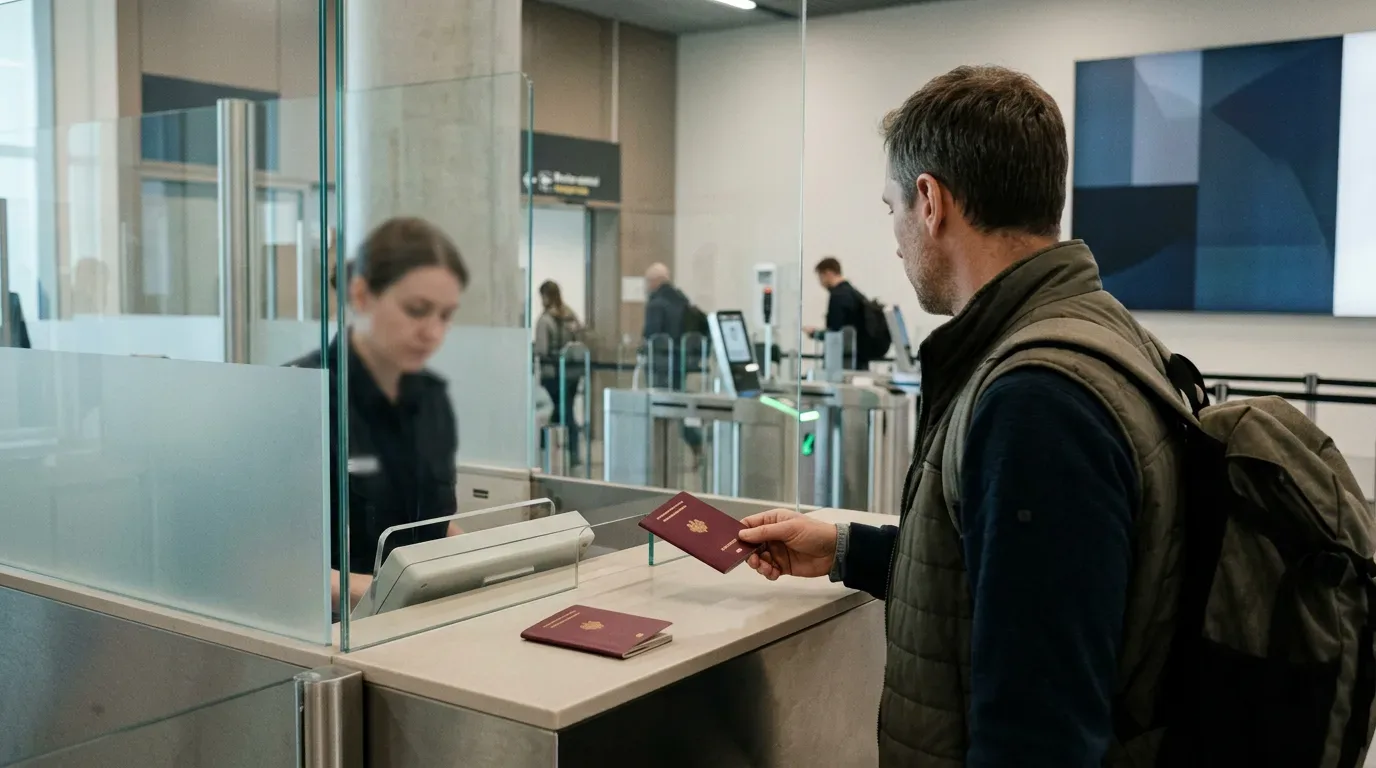
Belgium, the Netherlands and Luxembourg will stop recognising Russian international passports of the old, non-biometric type from 1 October 2026. Russian citizens travelling to any of these three Benelux countries should not assume that an old-style passport will remain valid for boarding, visa procedures or entry after that date. A biometric passport is an international passport containing an electronic chip.
Who is affected by the Benelux passport change
The change concerns Russian citizens intending to enter Belgium, the Netherlands or Luxembourg with an old-style Russian international passport that does not contain biometric data. It applies from 1 October 2026. Travellers should check the document they plan to use, rather than relying only on its printed expiry date.
This is particularly relevant for people travelling for family visits, work, study, medical treatment, residence-permit matters or other personal reasons. A valid visa, residence permit or other travel purpose does not remove the need to carry a travel document accepted by the destination country.
What has changed from 1 October 2026
From that date, non-biometric Russian international passports should no longer be treated as acceptable documents for entry to the three Benelux states. The Russian Embassy in Belgium linked the decision to the introduction of modern EU technologies and the electronic Entry/Exit System.
The practical risk is not limited to the border. A carrier may refuse boarding if a passenger does not hold an accepted travel document. A traveller may also face problems during visa or border procedures. For travel after the change takes effect, the safer course is to use a valid biometric Russian international passport.
Apply for a biometric passport before travel
A Russian citizen holding an old non-biometric passport should apply in advance for a biometric international passport and plan the trip using the new document. The time needed for appointments and passport issuance depends on the place of application, so it should be checked with the relevant Russian authority or the place where the application will be made.
Do not assume that a newly issued passport automatically updates an existing visa or residence permit. If an old passport contains a valid visa or a residence permit is connected to it, contact the consulate of Belgium, the Netherlands or Luxembourg responsible for the case. Ask how the passport replacement must be reflected in an already filed application, valid visa or residence document. The nationality, country of application, processing time, fee and submission method must be confirmed with the relevant consulate, the Russian Ministry of Foreign Affairs or the Russian Ministry of Internal Affairs.
Additional Belgian restrictions require separate checks
Belgium also has separate restrictions concerning certain Russian passports issued in Crimea, the Donetsk People’s Republic, the Luhansk People’s Republic, and the Kherson, Zaporizhzhia and Kharkiv regions during periods specified by the Belgian authorities. The restrictions may also concern documents issued to people residing in those areas.
The available information does not list the relevant periods or the full procedure for checking individual documents. Anyone whose passport was issued in, connected with, or issued to a resident of one of these areas should seek confirmation directly from the Belgian consulate before applying for a visa, purchasing transport or travelling.
Check travel documents before booking and departure
This passport-recognition change is separate from visa requirements. Russian citizens should still verify whether they need a visa or another entry authorisation for their specific trip and which documents the relevant consulate requires. Rules may differ depending on the destination country and the traveller’s individual status.
Before departure, confirm that the biometric passport is valid for the intended journey and meets the passport-validity requirements applicable to the visa and entry process. Those requirements, as well as any procedure for linking a visa to a replacement passport, should be checked with the competent consulate before submission or travel.
Что проверить
- Check whether your Russian international passport is an old non-biometric document.
- For travel to Belgium, the Netherlands or Luxembourg after 1 October 2026, apply for a biometric international passport in advance.
- Check the new passport’s validity against the requirements for your trip and, where relevant, your visa.
- If your old passport contains a valid visa or is linked to a residence permit, ask the relevant consulate how to use the replacement passport.
- Do not rely on an old non-biometric passport alone for boarding or entry after the change takes effect.
- Contact the Belgian consulate for an individual check if your passport was issued in Crimea, the Donetsk or Luhansk People’s Republics, or the Kherson, Zaporizhzhia or Kharkiv regions, or was issued to a resident there.